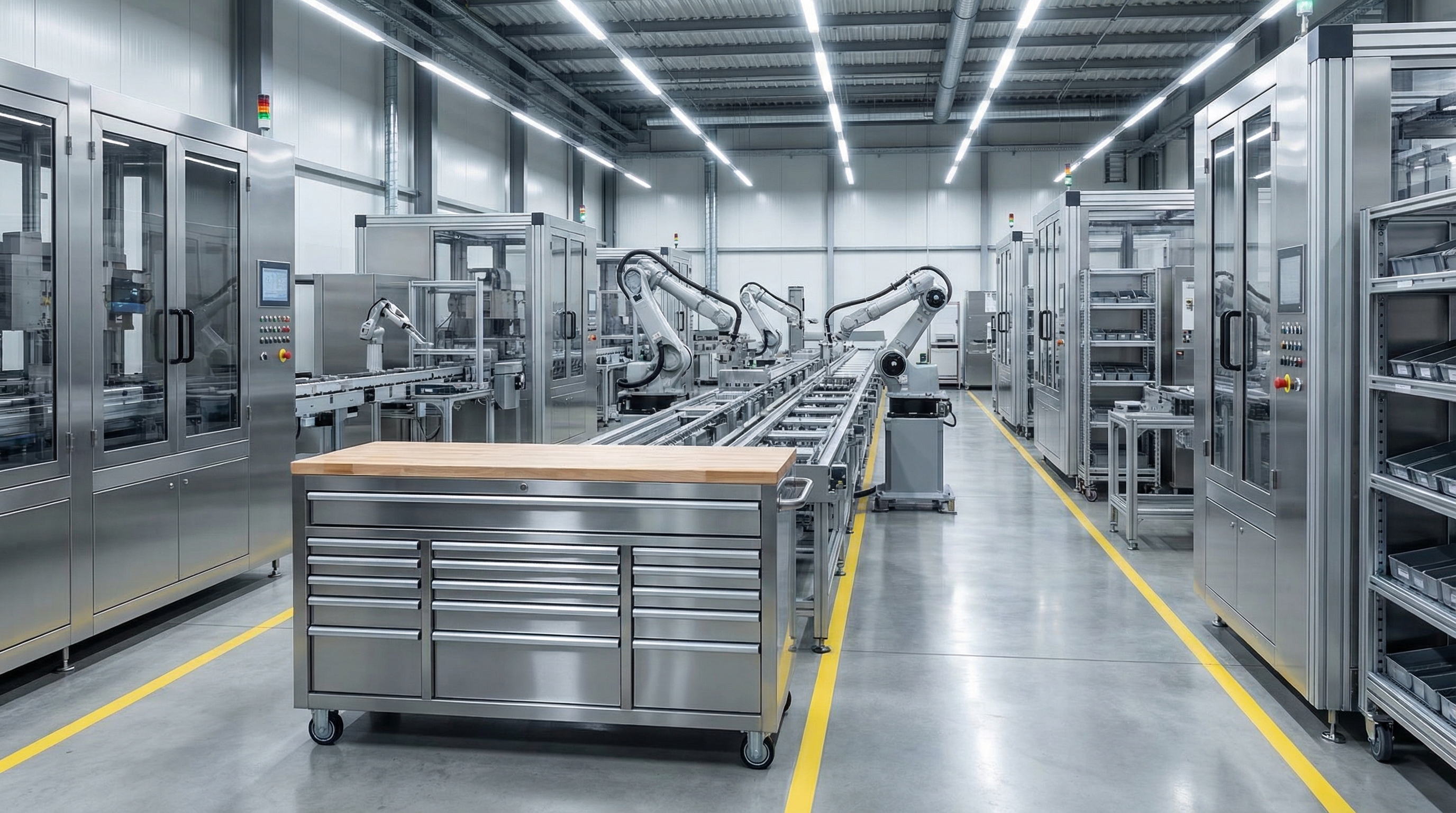
Industrial distributors and brand owners face significant operational hurdles when replacing a manufacturing partner. A strategic tool cabinet supplier switch requires a structured transition plan to mitigate risks related to product consistency, lead times, and spare parts compatibility. For engineering projects and global distribution networks, a seamless handover is critical to maintaining end-user trust. Distributors must validate the new manufacturer's production capacity, quality control checkpoints, and OEM/ODM capabilities before phasing out the legacy supplier.
Quick Navigation
Core Risks When Switching Tool Cabinet Suppliers
Changing manufacturing partners introduces variables that can impact your brand's reputation and project timelines if not managed correctly. Industrial buyers expect strict adherence to structural tolerances and material specifications.
Quality and Specification Drift in Engineering Projects
One of the primary risks during a supplier transition is specification drift. A new manufacturer might substitute a different grade of cold-rolled steel (SPCC) or apply a thinner powder coating to reduce costs. For industrial-grade storage used in heavy engineering projects, steel thickness should consistently measure between 1.0mm and 1.5mm, depending on the cabinet's load rating. Powder coating thickness must be verified at 60-80 microns to ensure resistance to industrial solvents and abrasions. Failure to establish these baselines in the Bill of Materials (BOM) can result in premature wear and increased warranty claims from end-users.
Lead Time Fluctuations and Inventory Gaps
Transitioning suppliers often creates a temporary vulnerability in your supply chain. Standard mass production lead times for metal storage solutions typically range from 30 to 45 days, excluding ocean freight. If the legacy supplier is terminated before the new supplier successfully completes First Article Inspection (FAI) and scales up production, distributors risk stockouts. Lead time fluctuations can severely delay engineering project rollouts or leave retail distributors with empty shelves. Maintaining a buffer inventory of at least 90 days is highly recommended before initiating the final cut-over.
[Image Prompt: Premium industrial photography. A modern, brightly lit manufacturing facility showing a quality control inspector examining the powder-coated finish of a heavy-duty tool cabinet. Clean lines, high-end corporate aesthetic, depth of field focusing on the inspector's digital caliper.]
Step-by-Step Supplier Validation Process
Thorough vetting is non-negotiable when selecting a new manufacturing partner. The validation process should be data-driven, focusing on verifiable production metrics and actionable buyer steps.
Factory Audits for Brand Distributors
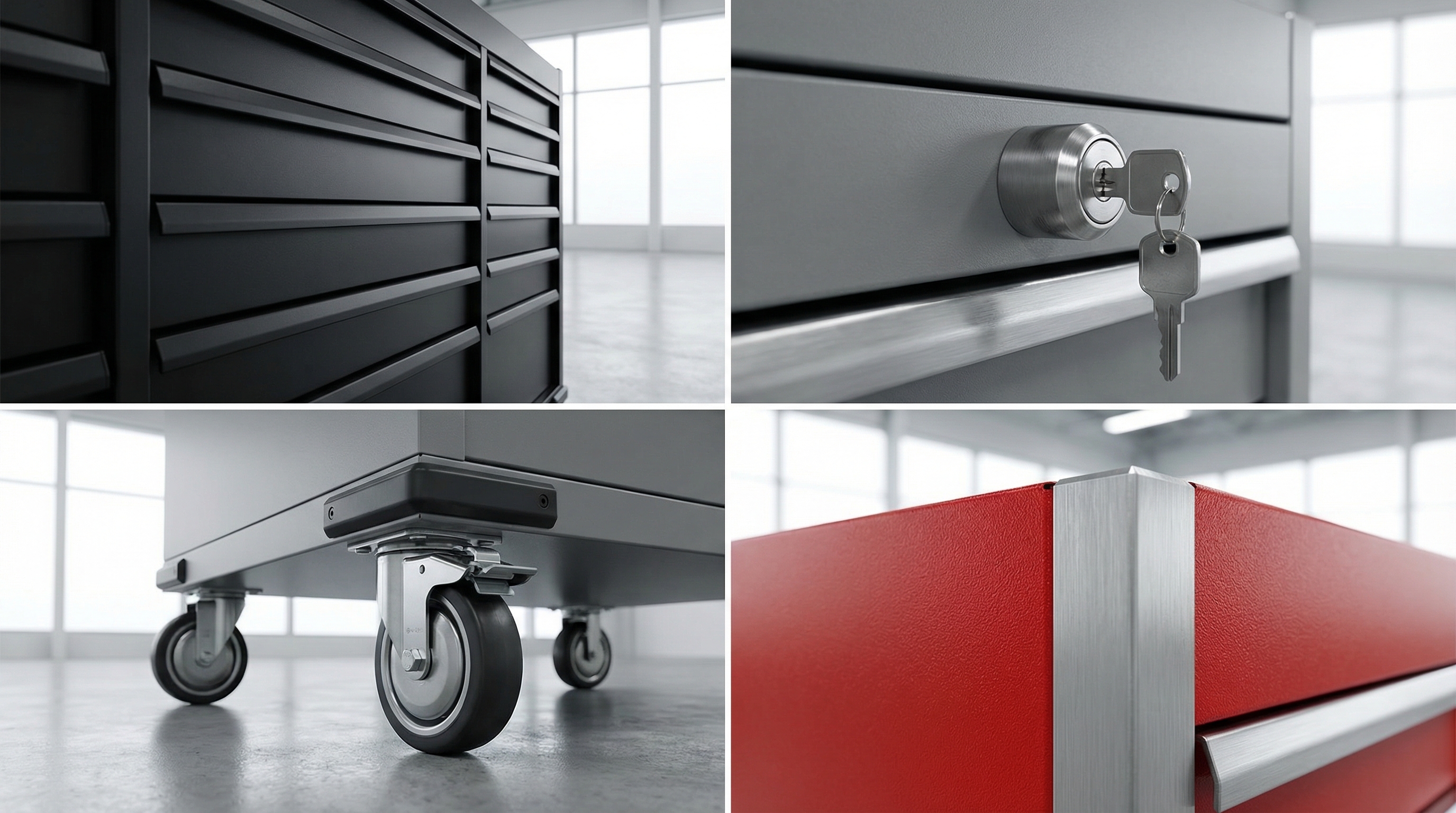
Begin by requesting current, verifiable certifications. An ISO 9001:2015 certification demonstrates that the factory has a formalized quality management system. For distributors supplying to highly regulated markets or large corporate buyers, social compliance audits like BSCI (Business Social Compliance Initiative) are increasingly mandatory. A physical or comprehensive virtual factory audit should evaluate raw material storage, automated laser cutting precision, welding consistency, and the powder coating line's environmental controls.
Prototyping (Sampling) and First Article Inspection (FAI)
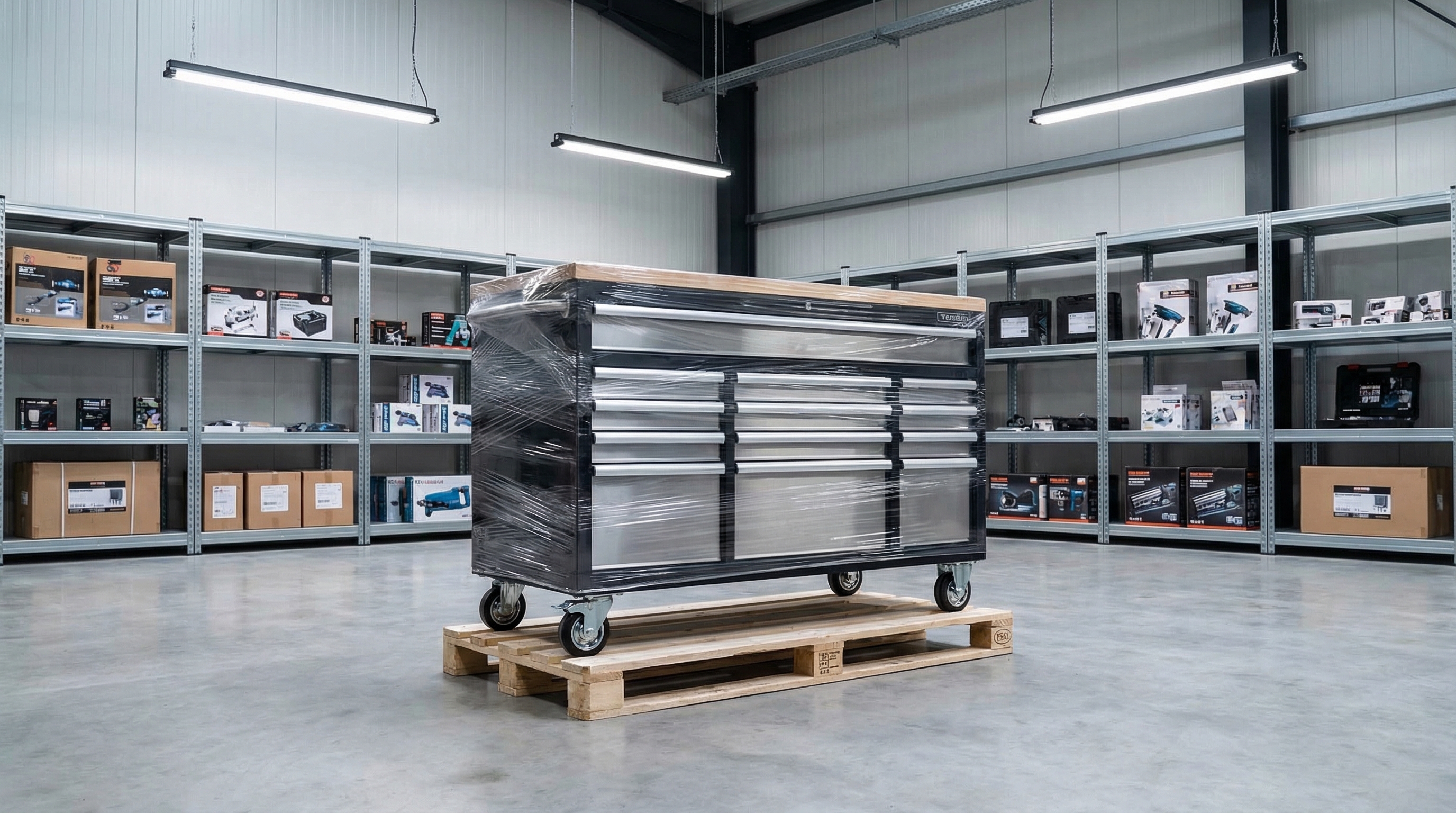
Before committing to a full container load (e.g., 1x40HQ), distributors must order prototypes. This sampling phase tests the manufacturer's engineering comprehension and communication speed. Once the prototype is approved, a trial order should be placed. During the FAI of this trial run, critical QC checkpoints must be evaluated: * Drawer Slide Load Testing: Verifying ball-bearing slides can handle rated capacities (e.g., 45kg to 100kg per drawer) without deflection over 50,000 cycles. * Caster Durability: Ensuring 5-inch TPR or PU casters operate smoothly under maximum static load, testing both swivel and locking mechanisms. * Locking Mechanism Alignment: Testing the central locking system for binding, misalignment, or vulnerability to forced entry.
Establishing the Claim Process and SLA
Before mass production begins, establish a clear Service Level Agreement (SLA). This document must outline the acceptable Defect Rate (typically <1%) and the exact claim process. If a batch fails incoming inspection, the SLA should dictate the required photographic evidence, batch number tracking, and the timeline for the manufacturer to issue replacement units or financial credit.
[Image Prompt: Premium industrial photography. A side-by-side visual comparison setup in a testing lab. Two industrial tool cabinets undergoing dynamic load testing on their drawer slides. Professional lighting, clean engineering environment, emphasizing structural durability and precision testing.]
Ensuring Spare Parts Continuity for Legacy Systems
Industrial end-users expect storage solutions to last for decades, which means distributors must supply replacement parts long after the original purchase. When switching suppliers, continuity of spare parts—specifically lock cylinders, keys, drawer slides, and casters—is a major concern for after-sales support.
A capable new supplier should be able to reverse-engineer or source compatible components for your legacy models. Provide the new manufacturer with technical drawings or physical samples of your existing wear parts. Establish an agreement where the new supplier produces a dedicated run of spare parts alongside your primary cabinet orders. This ensures you can continue servicing legacy warranties without relying on the phased-out manufacturer, maintaining seamless after-sales service.
Evaluating OEM/ODM Capabilities for Future Growth
Switching suppliers is not just about maintaining the status quo; it is a strategic opportunity to upgrade your product line. Distributors should evaluate the new factory's OEM (Original Equipment Manufacturer) and ODM (Original Design Manufacturer) capabilities.
Does the supplier have an in-house R&D team capable of designing custom drawer configurations, integrating smart-locking technologies (RFID/Bluetooth), or modifying dimensions to fit specific industrial niches? A supplier with strong OEM/ODM capabilities allows brand owners to differentiate their offerings in a crowded market, moving away from commoditized standard cabinets to premium, branded storage solutions tailored to specific engineering projects.
Transition Timeline and Order Phasing Strategy
A hard cut-over between suppliers is rarely advisable. A phased approach minimizes risk, stabilizes lead times, and allows for real-world quality validation.
| Transition Phase | Action Required | Typical Timeline | Key Metric / Milestone |
|---|---|---|---|
| Phase 1: Sourcing & Audits | Evaluate certifications, request quotes, conduct factory audits. | Weeks 1-4 | Supplier shortlisted based on ISO/QC standards. |
| Phase 2: Prototyping (Sampling) | Order custom samples, verify steel gauge and coating. | Weeks 5-8 | Prototype approved; FAI standards documented. |
| Phase 3: Trial Order | Place low-MOQ order (e.g., 1x20GP). Maintain legacy supplier. | Weeks 9-14 | Trial order passes incoming QC at distributor warehouse. |
| Phase 4: Volume Ramp-Up | Shift 50% of order volume to new supplier. Monitor lead times. | Weeks 15-20 | Consistent 30-45 day lead times achieved. |
| Phase 5: Full Cut-Over | Shift 100% of volume. Build spare parts inventory. | Weeks 21+ | Zero stockouts; defect rate below 1%. |
[Image Prompt: Premium industrial photography. A wide shot of a highly organized, automated warehouse showing rows of packaged tool cabinets ready for global export. Clean, modern logistics environment, emphasizing scale, reliability, and secure packaging.]
Why SAFEWELL Is a Practical Fit
For distributors and brand owners navigating a supplier transition, SAFEWELL provides a stable, highly capable manufacturing environment designed for international B2B partnerships.
- Advanced OEM/ODM Customization: SAFEWELL's core advantage lies in its robust OEM/ODM capabilities, allowing distributors to seamlessly replicate legacy designs or engineer entirely new, market-leading storage solutions tailored to specific engineering projects.
- Strict QC Checkpoints: Every production run undergoes rigorous testing, including SPCC steel gauge verification, powder coating adhesion tests, and dynamic load testing on drawer slides, ensuring zero specification drift.
- Scalable Production Capacity: With extensive manufacturing facilities, SAFEWELL easily accommodates trial MOQs while possessing the scale to handle high-volume, multi-container monthly orders, mitigating lead time fluctuations.
- Transparent Claim Processes: SAFEWELL operates with clear SLAs and dedicated after-sales support, ensuring that any rare defects are handled swiftly with structured claim processes and replacement guarantees.
FAQ
How should distributors approach sampling when evaluating a new tool cabinet manufacturer? Start with a standard prototype to verify baseline quality, such as steel gauge and powder coating thickness. Once approved, request a custom sample to test the manufacturer's OEM/ODM engineering capabilities and communication efficiency.
What are the mandatory inspection points during First Article Inspection (FAI)? Critical checkpoints include raw material thickness (verifying 1.0-1.5mm SPCC steel), powder coating adhesion (60-80 microns), dynamic load capacity of drawer slides (45-100kg), and caster durability under maximum static load.
How do we handle defect claims and after-sales support during the transition? Establish a clear Service Level Agreement (SLA) before mass production. This should detail acceptable defect rates (typically <1%) and a structured claim process requiring photographic evidence and batch numbers for swift replacement or financial credit.
How can we protect our inventory against lead time fluctuations from a new supplier? Maintain a 90-day buffer stock with your legacy supplier while placing a trial order (e.g., 1x20GP container) with the new factory. This allows you to gauge real-world production and shipping timelines without risking stockouts.
Can a new supplier provide compatible spare parts for our existing legacy cabinets? Yes, a capable OEM manufacturer can reverse-engineer or source compatible lock cylinders, drawer slides, and casters if provided with technical drawings or physical samples, ensuring uninterrupted warranty support.
Sources
- ISO 9001 Quality Management
- ThomasNet: Guide to Supplier Evaluation
- ASCM: Supply Chain Risk Management
Next Step: Start Your RFQ
Ready to upgrade your supply chain with a reliable manufacturing partner? Contact SAFEWELL today to discuss your specific OEM/ODM requirements, request a prototype, and begin a secure, phased transition for your industrial storage product lines.
Related Internal Resources
Use these pages to continue supplier qualification and project planning.
- Tool Cabinet Product Detail - Check core structure and component specifications.
- Tool Storage Product Range - Compare tool cabinet, tool cart, and modular storage options.
- OEM/ODM Program Overview - Review manufacturing workflow, sampling, and quality checkpoints.
- Project Case Studies - See delivered projects and implementation details for global buyers.
- OEM Tool Cart Supplier Audit Checklist for New B2B Buyers - Read another related article from SAFEWELL News.
- Top 10 Tool Cart OEM Manufacturers in China: What Global Brands Should Verify - Read another related article from SAFEWELL News.
Need a Factory Plan?
Share your RFQ and we will provide a practical manufacturing proposal.
Contact SAFEWELL