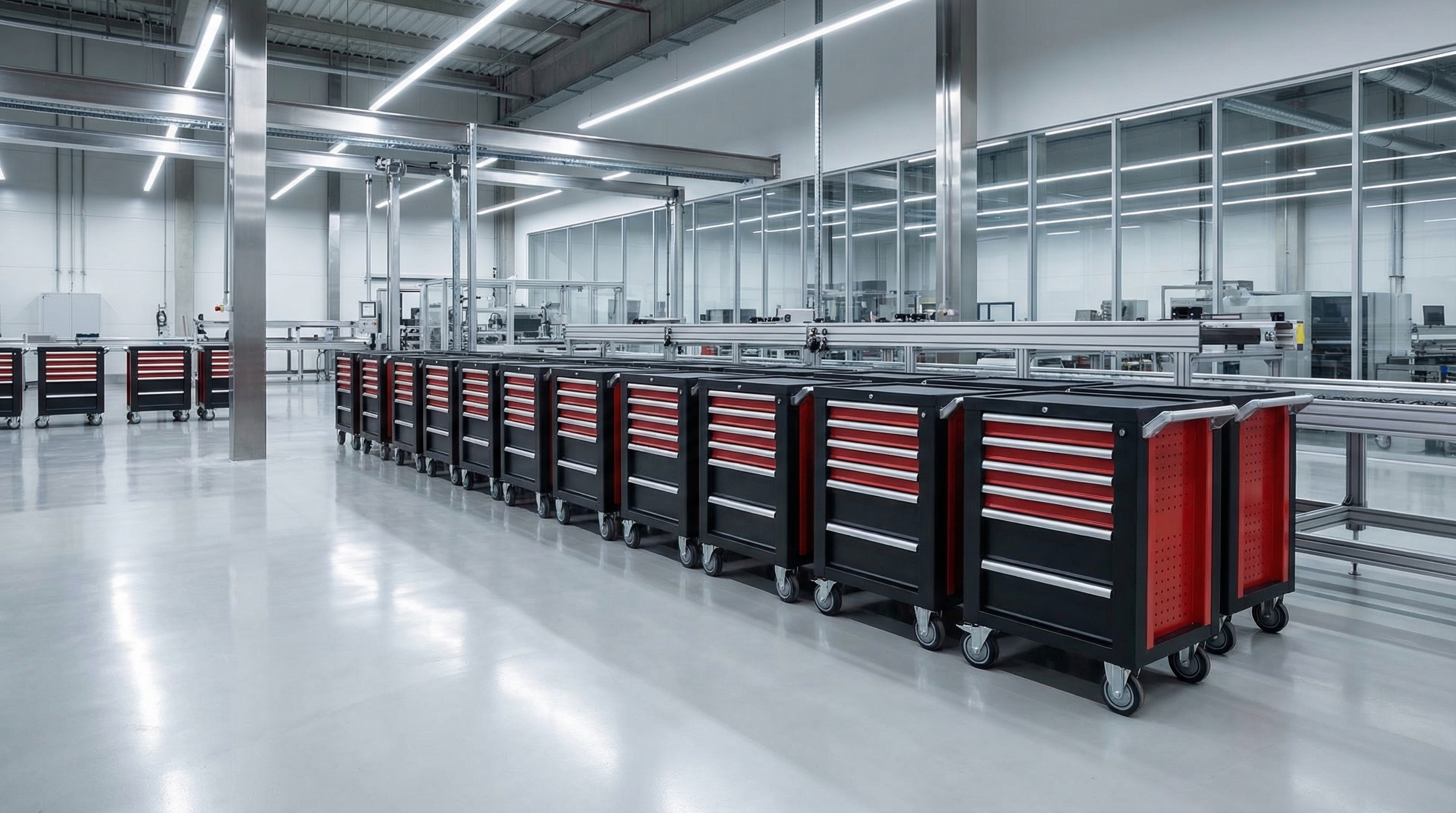
Auditing an OEM tool cart supplier requires a systematic evaluation of their sheet metal fabrication capabilities, quality control protocols, and supply chain stability. A rigorous audit ensures the manufacturer can meet specific load-bearing requirements, adhere to international export standards, and scale production without compromising structural integrity. For B2B brand owners, verifying these metrics upfront minimizes defect rates and secures reliable lead times for private label programs.
Quick Navigation
- 1. Core Manufacturing Capabilities for a Tool Cart
- 2. Quality Control (QC) Checkpoints and Certifications
- 3. Evaluating OEM/ODM Customization Flexibility
- 4. Production Capacity, MOQ, and Lead Times
- 5. Supply Chain Stability and Export Compliance
- Why SAFEWELL Is a Practical Fit
- Next Step: Start Your RFQ
- Frequently Asked Questions (FAQ)
1. Core Manufacturing Capabilities for a Tool Cart
When sourcing a tool cart manufacturer, the foundation of product quality lies in their primary fabrication equipment. An audit should verify that the supplier possesses modern, well-maintained machinery capable of handling heavy-duty materials.
Sheet Metal Fabrication and Welding
The structural integrity of a tool cart depends heavily on the quality of the steel and the precision of the fabrication process. Suppliers should typically utilize 18-to-22-gauge cold-rolled steel for standard professional carts, with heavier gauges applied to industrial-grade models. Audit the factory floor for CNC laser cutting machines and CNC press brakes, which ensure dimensional accuracy across large production runs. Furthermore, automated robotic welding is highly preferred over manual welding, as it guarantees consistent joint strength and clean seams, which are critical for carts expected to hold heavy dynamic loads.
Powder Coating and Surface Treatment
Industrial environments expose tool carts to chemicals, oils, and physical impacts. A premium supplier must operate an in-house, environmentally compliant powder coating line. During the audit, verify the pre-treatment process (such as phosphating or sandblasting) which ensures paint adhesion. The final powder coat should have a uniform thickness, generally between 60 and 80 microns, providing adequate resistance against rust and scratching.
2. Quality Control (QC) Checkpoints and Certifications
A robust Quality Management System (QMS), ideally certified to ISO 9001 standards, is non-negotiable for overseas manufacturing. The audit must trace the supplier's QC checkpoints from raw material intake to pre-shipment inspection.
Incoming Material Inspection (IQC)
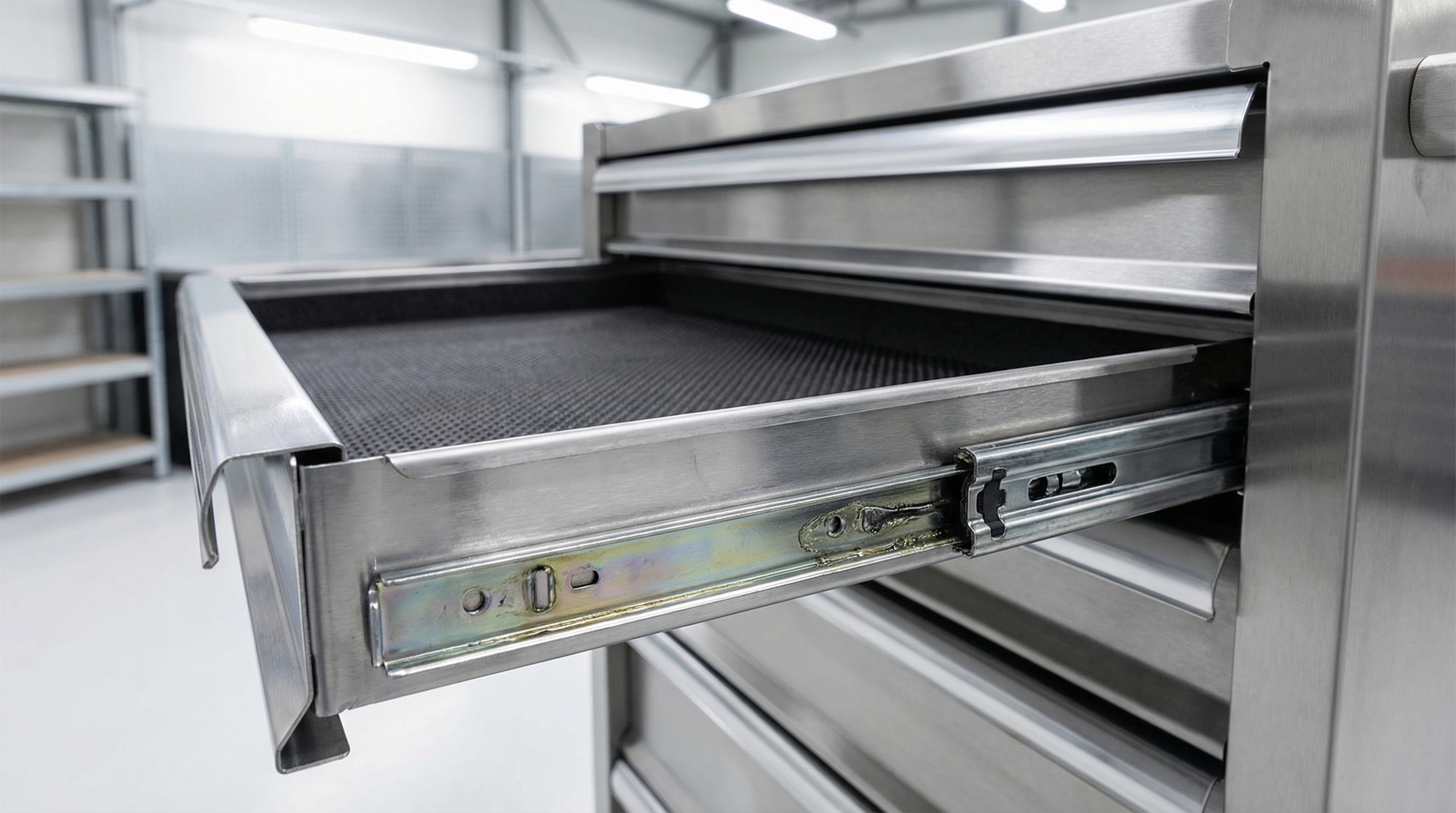
Before production begins, the supplier must verify the specifications of all raw materials and outsourced components. This includes checking steel thickness tolerances using micrometers, verifying the load ratings of polyurethane caster wheels, and testing the durability of drawer slides. For example, heavy-duty ball-bearing slides should be rated for at least 100 lbs (45 kg) per pair.
In-Process and Final Quality Control (IPQC & FQC)
During assembly, IPQC inspectors should monitor dimensional tolerances and weld integrity. Final Quality Control (FQC) must involve functional testing. Key tests include static load testing (applying maximum weight to the top surface and drawers), dynamic testing (rolling a fully loaded cart over uneven surfaces), and drawer cycle testing (often standardized to 50,000 open/close cycles to simulate years of use).
3. Evaluating OEM/ODM Customization Flexibility
For brand owners, the ability to differentiate products in the market is critical. A capable OEM/ODM supplier should offer extensive customization options rather than just off-the-shelf products with a stamped logo. Evaluate their engineering team's proficiency with CAD software (like SolidWorks or AutoCAD) and their ability to modify drawer configurations, overall dimensions, and accessory integrations (such as built-in power strips or pegboards). Additionally, verify their capability to accurately match custom brand colors using standard RAL or Pantone color codes during the powder coating process.

4. Production Capacity, MOQ, and Lead Times
Understanding a supplier's operational scale ensures they can meet your current demands and accommodate future growth. Minimum Order Quantities (MOQ) and lead times vary significantly based on the level of customization and the supplier's tier.
| Supplier Tier | Typical MOQ | Standard Lead Time | Custom Tooling Lead Time | Best Fit For |
|---|---|---|---|---|
| Tier 1 (Large Scale) | 200 - 500 units | 30 - 45 days | 45 - 60 days | High-volume global brands, strict compliance needs |
| Tier 2 (Mid-Scale) | 50 - 100 units | 40 - 50 days | 60 - 75 days | Growing B2B brands requiring high OEM flexibility |
| Tier 3 (Small Workshop) | 10 - 50 units | 20 - 30 days | N/A (Off-the-shelf only) | Local distributors, low-budget generic imports |
Note: Lead times are estimates from the date of deposit and approved technical drawings. Transit times are additional.
5. Supply Chain Stability and Export Compliance
An often-overlooked aspect of the supplier audit is packaging and export readiness. Tool carts are heavy, bulky items susceptible to damage during ocean freight. The supplier must utilize export-grade packaging, ideally compliant with ISTA (International Safe Transit Association) drop-test standards. This typically involves heavy-duty corrugated cartons, custom EPS foam inserts, and reinforced edge protectors. Additionally, verify that the supplier has a stable network for sourcing raw materials to prevent sudden price hikes or production delays, and that they possess all necessary export licenses and documentation capabilities.
Why SAFEWELL Is a Practical Fit
- In-House Fabrication: SAFEWELL operates advanced CNC laser cutting and robotic welding machinery, ensuring precise structural integrity for heavy-duty applications.
- Strict QC Protocols: From raw steel thickness verification to 50,000-cycle drawer testing, quality is monitored at every production stage.
- OEM/ODM Customization: A dedicated engineering team supports full private label programs, including custom dimensions, modular drawer layouts, and precise RAL color matching.
- Export-Ready Packaging: Products are secured using ISTA-compliant packaging methods to eliminate transit damage and ensure carts arrive in retail-ready condition.
Next Step: Start Your RFQ
Securing a reliable manufacturing partner is the most critical step in launching a successful private label product line. SAFEWELL's core advantage lies in comprehensive OEM/ODM customization capabilities, allowing B2B buyers to engineer tool storage solutions tailored to their exact market specifications. Contact our engineering and sales team today to submit your technical drawings, discuss MOQ requirements, and initiate your Request for Quotation (RFQ).
Frequently Asked Questions (FAQ)
What is the standard MOQ for a custom OEM tool cart? For a fully customized OEM tool cart, MOQs typically range from 50 to 100 units, depending on the complexity of the design and the required custom tooling. Off-the-shelf designs with simple logo branding may have lower MOQs.
How long does tooling take for a completely new tool cart design? Developing custom molds and tooling for a new design generally takes between 45 to 60 days. This includes the creation of prototypes for buyer approval before mass production begins.
What certifications should a reliable tool cart manufacturer hold? At a minimum, the manufacturer should hold an ISO 9001 certification for Quality Management Systems. Environmental certifications like ISO 14001 are also strong indicators of a modern, compliant facility.
How do suppliers test the load capacity of tool carts? Suppliers conduct static load tests by applying weights exceeding the rated capacity to the top surface and individual drawers for extended periods. Dynamic tests involve rolling the fully loaded cart to test caster wheel durability and structural rigidity.
Can I request specific caster wheel brands or materials for my private label carts? Yes. Capable OEM suppliers allow buyers to specify component details, including caster wheel materials (e.g., TPR, polyurethane, or nylon) and specific hardware brands, provided the buyer meets the necessary MOQ for those components.
Sources
- ISO 9001 Quality Management Systems: https://www.iso.org/iso-9001-quality-management.html
- ISTA Packaging Standards: https://ista.org/
- ASTM International Steel Standards: https://www.astm.org/
Related Internal Resources
Use these pages to continue supplier qualification and project planning.
- Tool Cart Solutions - Review rolling cart options and capacity classes.
- OEM/ODM Program Overview - Review manufacturing workflow, sampling, and quality checkpoints.
- Project Case Studies - See delivered projects and implementation details for global buyers.
- Request Factory Quote - Send your RFQ and receive a practical sourcing proposal.
- Top 10 Tool Cart OEM Manufacturers in China: What Global Brands Should Verify - Read another related article from SAFEWELL News.
- How to Prevent Tool Cart Caster Failure in High-Load Workshops - Read another related article from SAFEWELL News.
Need a Factory Plan?
Share your RFQ and we will provide a practical manufacturing proposal.
Contact SAFEWELL