Qualifying a tool box manufacturer for OEM programs requires a systematic evaluation of their production capabilities, quality assurance systems, supply chain robustness, and financial stability. Successful partnerships hinge on a manufacturer's proven ability to consistently deliver products that meet precise specifications, adhere to international standards, and manage production volumes efficiently. This comprehensive assessment ensures long-term reliability and minimizes risks for B2B importers, distributors, and procurement teams.
Quick Navigation
Evaluating Tool Box Manufacturer Capabilities and Capacity
Assessing the manufacturing capabilities of a potential tool box manufacturer is paramount for any OEM program. This involves a deep dive into their production infrastructure, technological sophistication, and overall capacity to meet your specific volume and customization requirements.
Production Technology and Equipment
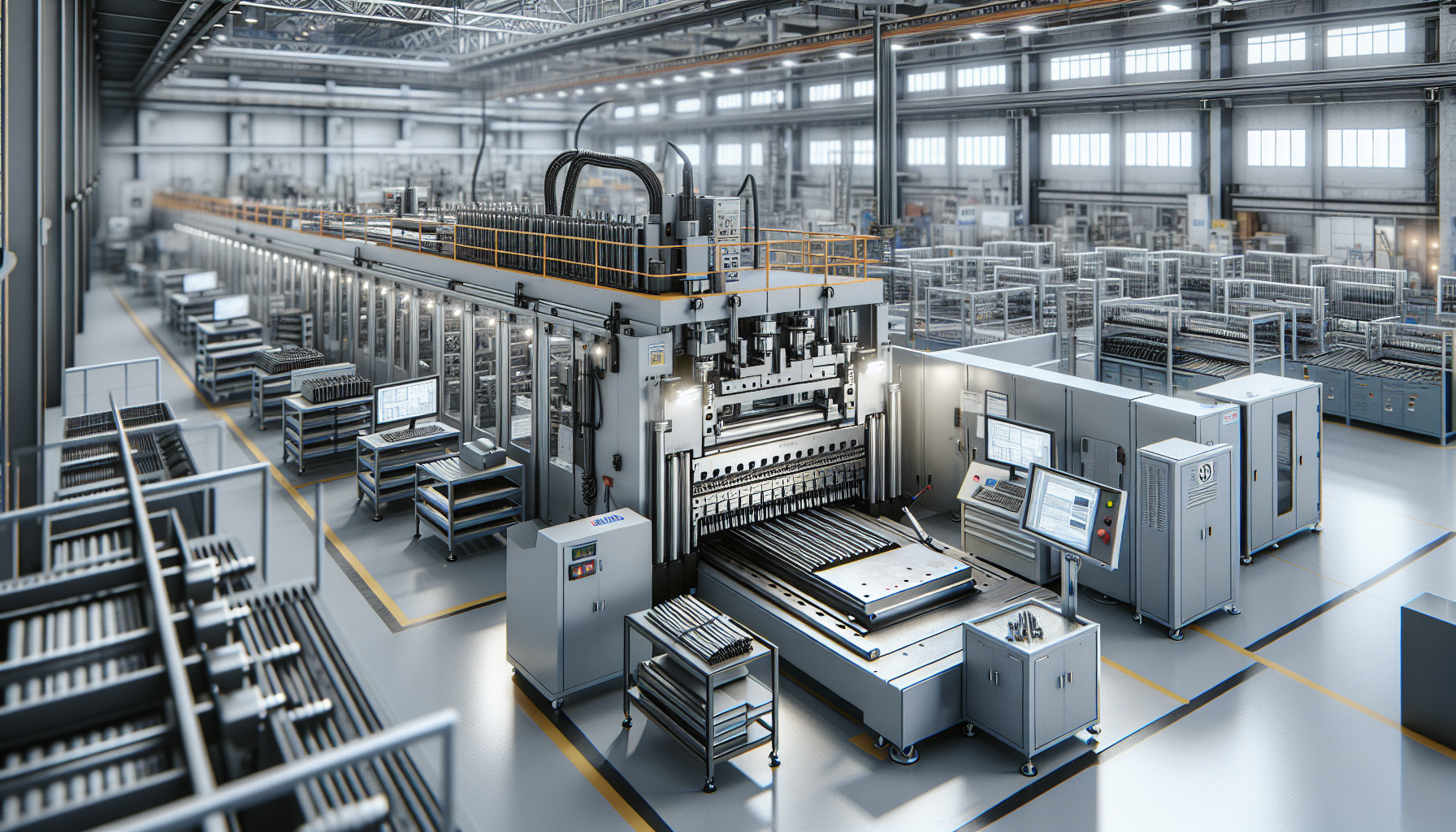
Examine the manufacturer's machinery and production lines. Modern, well-maintained equipment for metal forming (e.g., CNC bending, laser cutting), welding (e.g., robotic welding), and finishing (e.g., powder coating lines) indicates efficiency and precision. Inquire about their tooling capabilities for custom designs and their capacity for rapid prototyping. A manufacturer with advanced automation can often offer better consistency and scalability. For instance, a facility utilizing automated powder coating lines can achieve a more uniform finish and higher throughput compared to manual processes.
Material Sourcing and Management
Understand how the manufacturer sources and manages raw materials. This includes the quality of steel, aluminum, or plastics used, and their relationships with material suppliers. A robust material management system ensures consistent quality and mitigates supply chain disruptions. Inquire about their inventory management practices, particularly for critical components, to avoid delays. For example, a manufacturer with multiple qualified steel suppliers and a buffer stock policy is less susceptible to single-source failures.
Quality Control and Assurance Protocols
Consistent product quality is non-negotiable for OEM programs. A thorough review of a tool box manufacturer's Quality Control (QC) and Quality Assurance (QA) protocols is essential to ensure that every unit meets your specifications and industry standards.
Inspection and Testing Regimes
Investigate the manufacturer's inspection points throughout the production process. This typically includes:
- Incoming Material Inspection: Verifying raw materials meet specifications (e.g., material thickness, alloy composition).
- In-Process Inspection: Checks at critical stages such as cutting, bending, welding, and assembly to identify defects early. Common checkpoints include weld integrity, dimensional accuracy, and surface preparation.
- Pre-Treatment Inspection: Ensuring surfaces are properly cleaned and prepared before painting or coating.
- Final Inspection: A comprehensive check of the finished product against AQL (Acceptable Quality Limit) standards, covering dimensions, finish quality, functionality of latches/hinges, and packaging integrity. A typical AQL for minor defects might be 2.5%, and for major defects, 0.65%.
Request access to their QC documentation, defect rates, and corrective action reports. A manufacturer committed to quality will have clear, documented procedures and a history of continuous improvement.
Supply Chain Reliability and Logistics
An efficient and reliable supply chain is critical for timely delivery and cost management. Evaluate the tool box manufacturer's ability to manage lead times, shipping, and potential disruptions.
Discuss their typical lead times for both initial orders and reorders. Initial OEM orders, including tooling and first production runs, can range from 12 to 20 weeks. Subsequent reorders for established designs typically require 6-10 weeks, depending on order volume and material availability. Understand their logistics capabilities, including packaging, warehousing, and shipping partnerships. Inquire about their strategies for mitigating supply chain risks, such as geopolitical instability, natural disasters, or raw material shortages. A manufacturer with diversified shipping routes and contingency plans demonstrates greater reliability.
Regulatory Compliance and Certifications
Compliance with international standards and regulations is crucial for market access and product safety. Verify the manufacturer's adherence to relevant certifications and ethical practices.
Look for certifications such as ISO 9001 for quality management systems and ISO 14001 for environmental management. Depending on your target market, specific product certifications like CE (for Europe) or UL (for North America) might be necessary for certain components or applications. Discuss their compliance with material restrictions like RoHS (Restriction of Hazardous Substances) and REACH (Registration, Evaluation, Authorisation and Restriction of Chemicals), especially if your tool boxes contain electronic components or specific finishes. Furthermore, assess their commitment to ethical labor practices and social responsibility, which can be verified through audits like SA8000 or Sedex.
Financial Stability and Partnership Potential
Beyond operational capabilities, the financial health of a tool box manufacturer is a key indicator of their long-term viability as an OEM partner. A stable manufacturer can invest in new technologies, maintain consistent quality, and withstand market fluctuations.
Request financial statements or credit reports to assess their stability. Evaluate their operational longevity, investment in R&D, and capacity for growth. A strong OEM partnership is built on mutual trust and clear communication. Assess their responsiveness, transparency, and willingness to collaborate on design improvements or problem-solving. A dedicated account manager and clear communication channels are vital for a successful, long-term relationship.
Here is a summary of key qualification criteria:
| Qualification Area | Key Considerations | Importance for OEM Programs |
|---|---|---|
| Manufacturing Capability | Production capacity, tooling expertise, material handling, customization options, scalability | High |
| Quality Control | ISO 9001, AQL standards, in-process checks, final inspection, defect rate history, traceability | Critical |
| Supply Chain Management | Lead times, raw material supplier stability, logistics network, inventory management, risk mitigation | High |
| Certifications & Compliance | ISO 14001, RoHS/REACH, CE/UL (if applicable), ethical sourcing, labor practices | High |
| Communication & Support | Responsiveness, dedicated account management, technical support, language proficiency | Medium |
| Financial Stability | Credit history, operational longevity, investment in R&D/equipment, ability to scale | High |
FAQ
What is the typical MOQ for custom OEM tool boxes?
Minimum Order Quantities (MOQ) for custom OEM tool boxes typically range from 500 to 2,000 units, depending on the complexity of the design, material specifications, and the manufacturer's production line setup. Smaller runs may be possible but often incur higher per-unit costs.
How long is the lead time for an initial OEM tool box order?
Initial lead times for OEM tool box orders, including tooling development and first production run, can range from 12 to 20 weeks. Subsequent reorders for established designs usually shorten to 6-10 weeks, contingent on material availability and production scheduling.
What certifications should I look for in a tool box manufacturer?
Key certifications include ISO 9001 for quality management systems, ISO 14001 for environmental management, and potentially specific material certifications (e.g., RoHS, REACH compliance for certain components or finishes). Compliance with regional safety standards (e.g., CE for Europe) may also be relevant depending on the target market.
How can I ensure consistent quality for ongoing OEM orders?
To ensure consistent quality, implement a robust Quality Assurance (QA) plan including pre-production sample approval, in-process inspections at critical stages (e.g., welding, painting), and final inspection (AQL standards). Regular factory audits and clear communication channels with the manufacturer's QC team are also essential.
What are common payment terms for OEM manufacturing?
Standard payment terms often involve an upfront deposit (e.g., 30-50%) to initiate production, with the remaining balance due upon completion and pre-shipment inspection, or against shipping documents (e.g., Bill of Lading). Establishing a Letter of Credit (LC) can provide additional security for larger orders.
Sources
Related Internal Resources
Use these pages to continue supplier qualification and project planning.
- Tool Box Product Line - See toolbox variants for distribution and OEM programs.
- Supplier Qualification Process - Understand factory qualification and program controls.
- Project Case Studies - See delivered projects and implementation details for global buyers.
- Request Factory Quote - Send your RFQ and receive a practical sourcing proposal.
- More SAFEWELL News Articles - Browse the latest published insights and factory updates.
Need a tailored cabinet program for your market?
REQUEST OEM/ODM CONFIGURATION SUPPORT