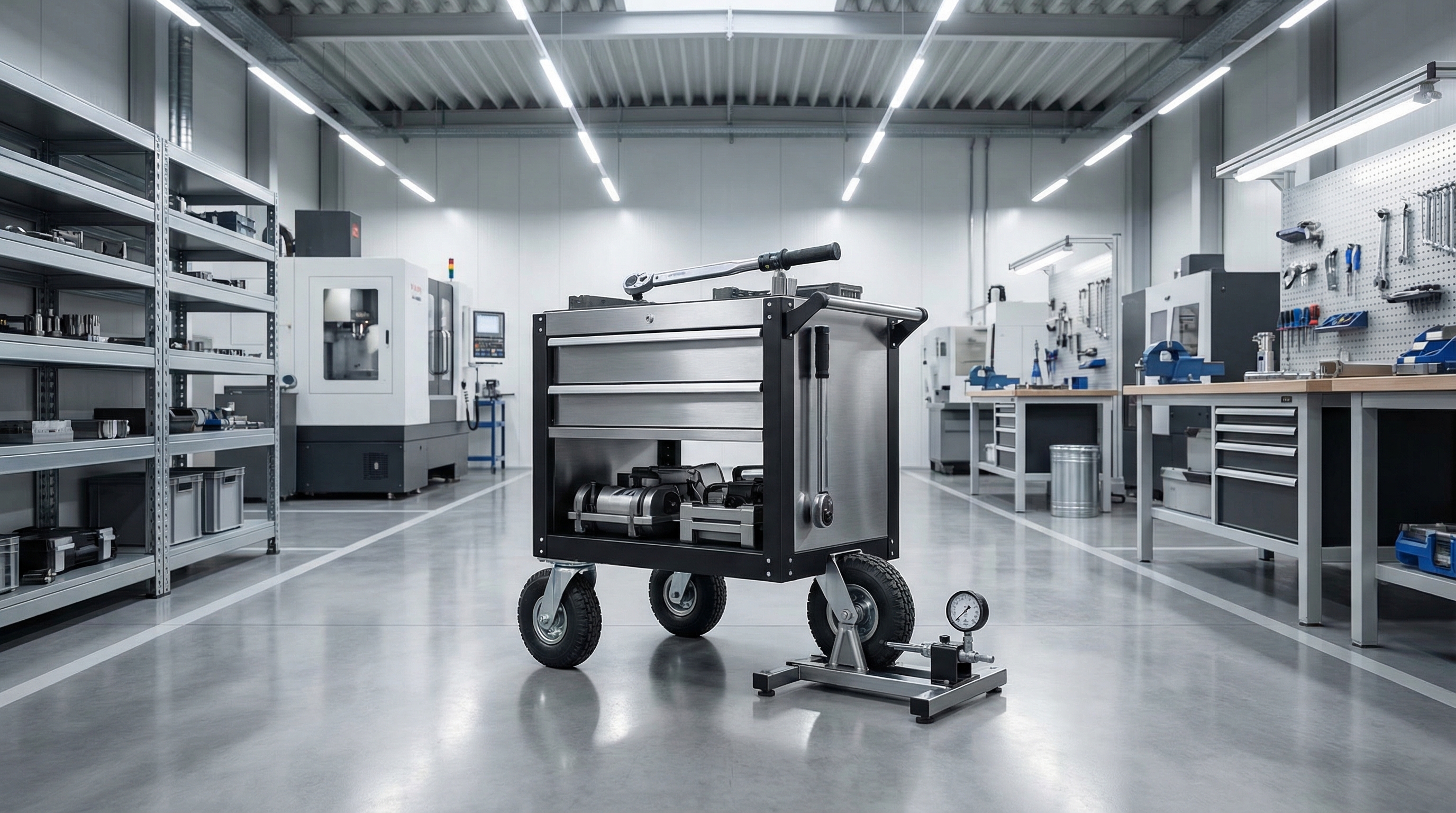
For industrial distributors, a heavy-duty tool cart is only as reliable as its mobility system. Preventing caster failure requires more than just selecting a wheel that looks durable; it demands matching the wheel material to the facility floor, calculating dynamic load capacities rather than relying on static limits, and auditing the quality control standards of the manufacturer. High-load workshops must specify heavy-duty casters with precision bearings and reinforced steel forks to withstand continuous impact and debris. Distributors evaluating replacement suppliers should prioritize manufacturing partners that provide documented dynamic load testing and strict quality control checkpoints.
Image Prompt 1: A documentary-realistic close-up of a heavy-duty polyurethane caster wheel attached to the reinforced steel base of an industrial tool cart, resting on a polished concrete workshop floor. Natural factory lighting, sharp focus on the steel fork, grease fitting, and wheel bearings.
Quick Navigation
Understanding the Root Causes of Tool Cart Caster Failure
In high-load industrial environments, caster failure rarely happens overnight. It is typically the result of compounding stress factors that degrade the wheel, bearing, or mounting rig over time. For industrial distributors, understanding these root causes is the first step in evaluating whether a current supplier's specifications meet end-user demands.
The most common cause of failure is dynamic overloading. While a cart may be rated for a specific static weight, moving that same weight across uneven concrete floors, expansion joints, or thresholds multiplies the impact force on the casters.
Additionally, debris entanglement—such as metal shavings, zip ties, or packaging straps wrapping around the axle—can seize the bearings, causing the wheel to drag and flat-spot. Finally, chemical degradation plays a significant role in automotive and aerospace workshops, where exposure to solvents, cutting fluids, and oils can break down inferior wheel materials, leading to cracking and catastrophic failure.
Selecting the Right Caster Material for Industrial Floors
Specifying the correct caster material is a critical procurement decision. The wheel material must balance load-bearing capacity with floor protection, noise reduction, and chemical resistance.
Polyurethane (PU) vs. Rubber
Polyurethane (PU) is the industry standard for high-load tool carts. PU wheels offer the load capacity of steel while providing the floor protection and noise reduction of rubber. They are highly resistant to oils, greases, and most industrial chemicals, making them ideal for manufacturing floors. Rubber casters, while excellent for shock absorption and quiet operation, have lower load capacities and are susceptible to degradation when exposed to industrial solvents. For heavy-duty applications, PU bonded to a cast iron or aluminum core is the optimal choice.
Steel and Cast Iron Options
For extreme load capacities where floor protection is not a priority—such as in heavy fabrication shops or foundries—forged steel or cast iron casters are utilized. These materials offer the highest possible weight ratings and are impervious to sharp debris that would shred softer wheels. However, they are noisy, offer zero shock absorption, and will damage untreated concrete floors over time.
Caster Material Decision Matrix
To assist in supplier evaluation and specification, use the following matrix to align caster materials with end-user environments:
| Wheel Material | Ideal Floor Type | Relative Load Capacity | Chemical Resistance | Best Industrial Application |
|---|---|---|---|---|
| Polyurethane (PU) | Concrete, Epoxy, Tile | High | Excellent | General manufacturing, automotive, aerospace |
| Thermoplastic Rubber | Smooth Concrete, Linoleum | Medium | Fair | Cleanrooms, light assembly, quiet zones |
| Forged Steel | Rough Concrete, Steel Plates | Very High | Excellent | Heavy fabrication, foundries, extreme loads |
| Nylon / Polyamide | Smooth Concrete | High | Very Good | Food processing, wet environments |
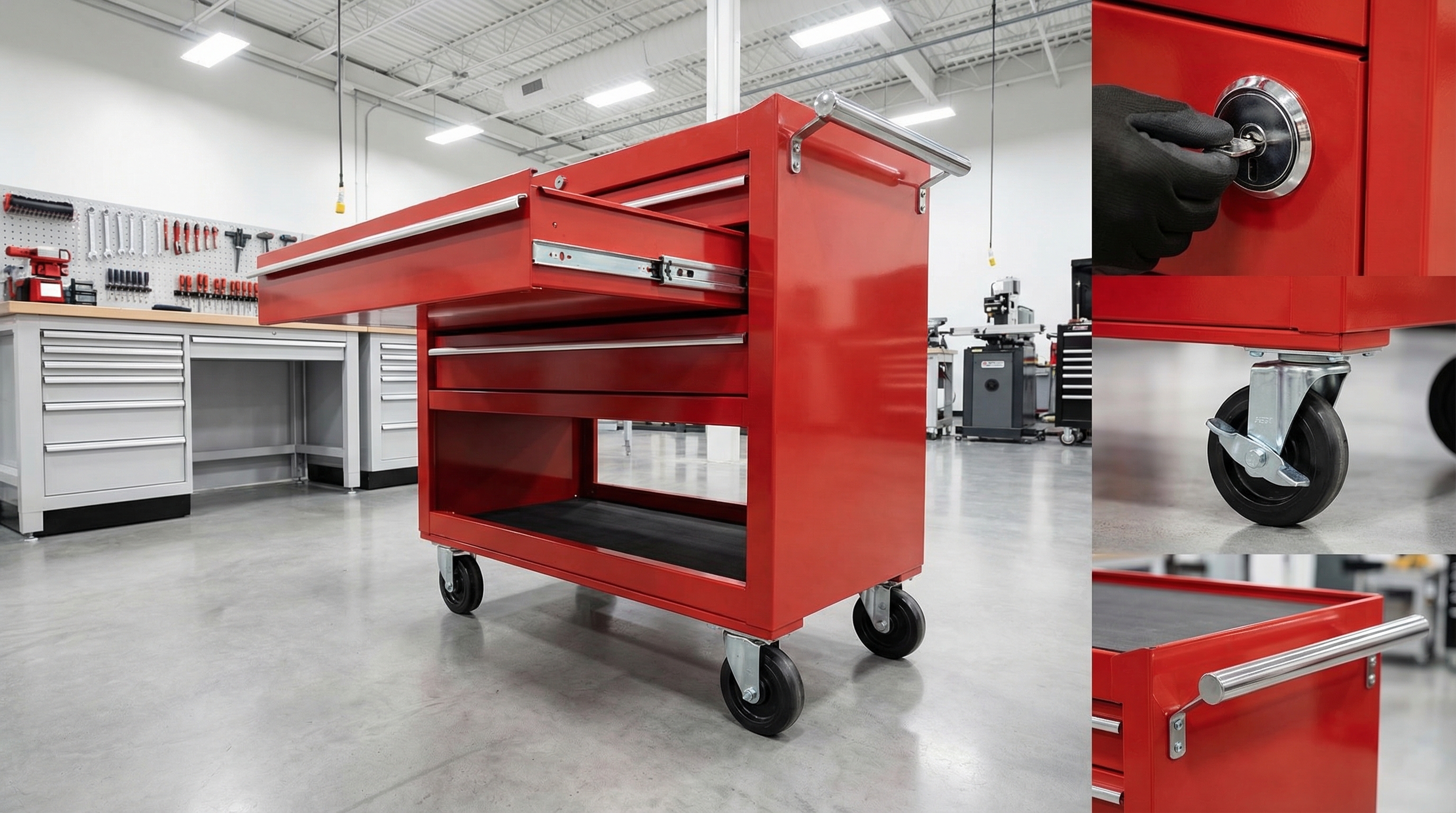
Image Prompt 2: A documentary-realistic wide shot of a quality control testing facility where a fully loaded industrial tool cart is being pulled across a standardized obstacle track by an automated testing rig. Industrial testing equipment in the background, bright fluorescent lighting, professional engineering environment.
Calculating Dynamic vs. Static Load Capacities
A frequent error in B2B procurement is relying solely on static load ratings. Static load refers to the maximum weight a tool cart can hold while stationary. Dynamic load refers to the weight the cart can safely support while in motion.
When calculating the required dynamic load capacity for a tool cart, engineers use a standard safety factor to account for uneven floors. The formula dictates dividing the total desired load (cart weight plus maximum payload) by three, rather than four. This assumes that on an uneven surface, only three of the four casters will bear the entire weight of the cart at any given moment.
For example, if a fully loaded cart weighs 1,200 kg, each caster must have a dynamic load rating of at least 400 kg. Specifying casters based on this formula prevents premature rig bending and bearing collapse, significantly extending the lifecycle of the product.
Actionable Steps for Distributors Evaluating Suppliers
When evaluating a new manufacturing partner, distributors must look beyond the spec sheet and audit the supplier's Quality Control (QC) infrastructure. Reliable OEM/ODM manufacturers will have documented testing procedures for their mobility components.
1. Audit Standard QC Checkpoints
Top-tier manufacturers implement rigorous QC checkpoints before mass production. Distributors should request documentation for: * Dynamic Rolling Tests: A fully loaded cart is pulled over a standardized obstacle course for thousands of cycles to test bearing endurance and wheel wear. * Impact Testing: Dropping a specified weight onto the cart to ensure the caster forks do not deform under sudden stress. * Salt Spray Testing: Typically 48 to 72 hours of exposure to verify the efficacy of the zinc plating or powder coating on the steel rigs against corrosion.
2. Verify Maintenance Protocols
Even the highest-quality casters require routine maintenance. Ensure the supplier provides clear maintenance guidelines that end-users can follow. This includes specifying lubrication intervals for grease fittings (Zerk fittings) on both the wheel hub and the swivel raceway, as well as routine torque checks on mounting bolts to prevent rig failure from vibration.
3. Review Certification Context and B2B Data
Distributors should partner with facilities operating under ISO 9001:2015 Quality Management Systems. Casters should ideally meet or exceed ANSI/BIFMA standards for mobility. When transitioning to a new supplier for custom configurations, buyers should expect standard OEM Minimum Order Quantities (MOQs) to range between 50 and 100 units, with production lead times averaging 30 to 45 days following prototype approval.
Image Prompt 3: A documentary-realistic image of two industrial procurement managers in a modern manufacturing facility, reviewing a technical blueprint on a tablet next to a heavy-duty tool cart. Focus on the professional B2B evaluation process, natural lighting, shallow depth of field.
Why SAFEWELL Is a Practical Fit
For distributors seeking a reliable manufacturing partner to replace underperforming suppliers, SAFEWELL provides robust, scalable solutions designed specifically for high-load environments.
- Advanced OEM/ODM Customization: SAFEWELL engineers tailor caster configurations—including wheel material, bearing type, and rig thickness—to meet the specific dynamic load and environmental requirements of your target market.
- Rigorous QC Checkpoints: Every batch undergoes strict dynamic load testing, impact resistance checks, and salt spray corrosion testing to ensure long-term durability and eliminate premature field failures.
- Predictable B2B Metrics: With standardized lead times of 30-45 days and flexible MOQs for custom OEM projects, SAFEWELL supports efficient, risk-free supply chain management.
- Certified Manufacturing: Operating under ISO 9001 standards, SAFEWELL guarantees consistent, repeatable quality across high-volume production runs, protecting your brand's reputation.
Next Step: Start Your RFQ
Upgrading your product line requires a manufacturing partner capable of executing precise technical specifications. SAFEWELL's OEM/ODM customization capabilities ensure your tool carts are equipped with the exact mobility solutions your end-users demand. Contact our engineering team today to submit your RFQ, request load-testing documentation, and begin prototyping your next high-performance industrial storage solution.
FAQ
What is the standard safety factor for calculating caster load capacity?
The industry standard is to divide the total maximum weight (cart weight plus payload) by three rather than four. This ensures the cart remains safely supported even if one wheel loses contact with the ground on an uneven surface.
How often should industrial casters be lubricated?
In high-load or continuous-use environments, casters equipped with grease fittings (Zerk fittings) should be lubricated every three to six months using high-quality industrial lithium grease.
Can we upgrade the casters on an existing OEM order?
Yes. A capable OEM/ODM manufacturer can modify caster specifications—such as upgrading from rubber to polyurethane or increasing the steel rig thickness—during the engineering review phase prior to mass production.
What causes polyurethane casters to flat-spot?
Flat-spotting typically occurs when a heavily loaded cart is left stationary for extended periods, or when debris seizes the bearing, causing the wheel to drag across the floor rather than roll.
Are rigid or swivel casters better for high-load applications?
Most industrial tool carts utilize a combination of two rigid casters (for straight-line tracking) and two swivel casters (for steering). For extreme maneuverability in tight spaces, four swivel casters with directional locks can be specified.
Sources
Related Internal Resources
Use these pages to continue supplier qualification and project planning.
- Tool Cart Solutions - Review rolling cart options and capacity classes.
- OEM/ODM Program Overview - Review manufacturing workflow, sampling, and quality checkpoints.
- Project Case Studies - See delivered projects and implementation details for global buyers.
- Request Factory Quote - Send your RFQ and receive a practical sourcing proposal.
- A Buyer's Guide to Vetting China's Top Tool Cart OEM Manufacturers - Read another related article from SAFEWELL News.
- How to Qualify a Tool Box Manufacturer for OEM Programs - Read another related article from SAFEWELL News.
Need a Factory Plan?
Share your RFQ and we will provide a practical manufacturing proposal.
Contact SAFEWELL