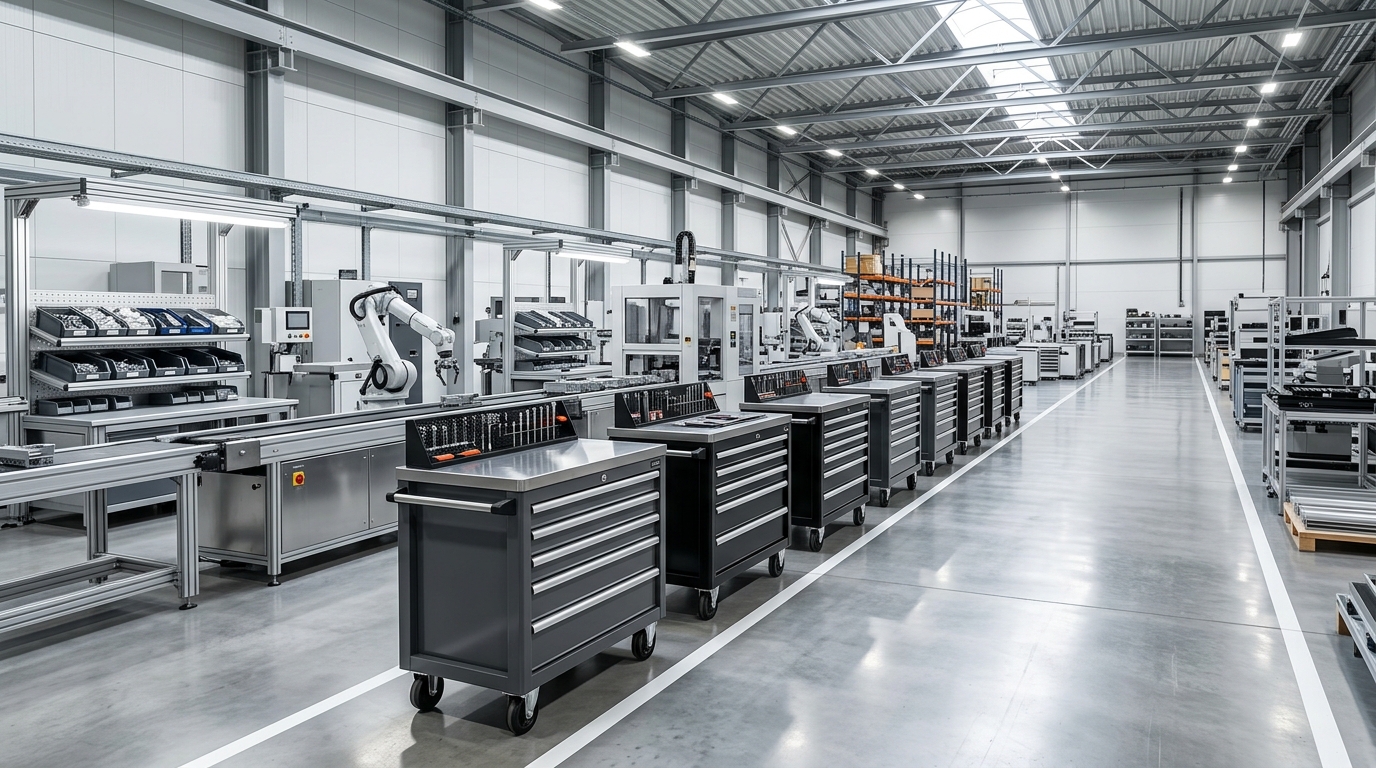
Launching a tool cart OEM program requires aligning your brand's exact specifications with a capable manufacturing partner. Whether you are expanding an existing hardware catalog or launching a new line of private label mechanic tool carts, success depends on systematic procurement. A successful rollout moves methodically from initial RFQ and CAD design validation to physical sampling, mass production, and strict quality control. By establishing clear parameters for steel gauge, load capacities, and packaging compliance, brand owners can secure reliable private label tool storage solutions for global distribution.
Quick Navigation
Key Takeaways
- Define Exact Specifications: Detail steel thickness (e.g., 18-22 gauge), caster load ratings, and drawer slide mechanisms before issuing an RFQ.
- Validate Through Sampling: Allocate 30 to 45 days for initial prototyping to validate structural integrity, weld quality, and finish.
- Enforce Strict QC: Establish clear quality control checkpoints, focusing on robotic weld strength, powder coat adhesion, and drawer alignment.
- Plan for Standard MOQs: Expect an oem tool cart minimum order quantity ranging from 50 to 100 units per SKU, depending on customization complexity.
- Prioritize Packaging: Ensure packaging is ISTA drop-test certified to prevent transit damage, a critical factor in heavy-duty tool cart logistics.
The Tool Cart OEM Manufacturing Process
Developing a private label product line requires a deep understanding of the manufacturing workflow. A structured approach ensures that the final product meets industrial standards and brand expectations.
Design and Specification Handoff
The process begins with translating your requirements into actionable engineering data. Buyers must provide detailed CAD drawings, Bills of Materials (BOM), and specific material requests, such as cold-rolled steel (SPCC) or electro-galvanized steel (SECC). This is the stage to define the aesthetic and protective finishes required for custom powder coated tool cabinets, specifying exact RAL colors, gloss levels, and texture profiles.
Prototyping and Component Validation
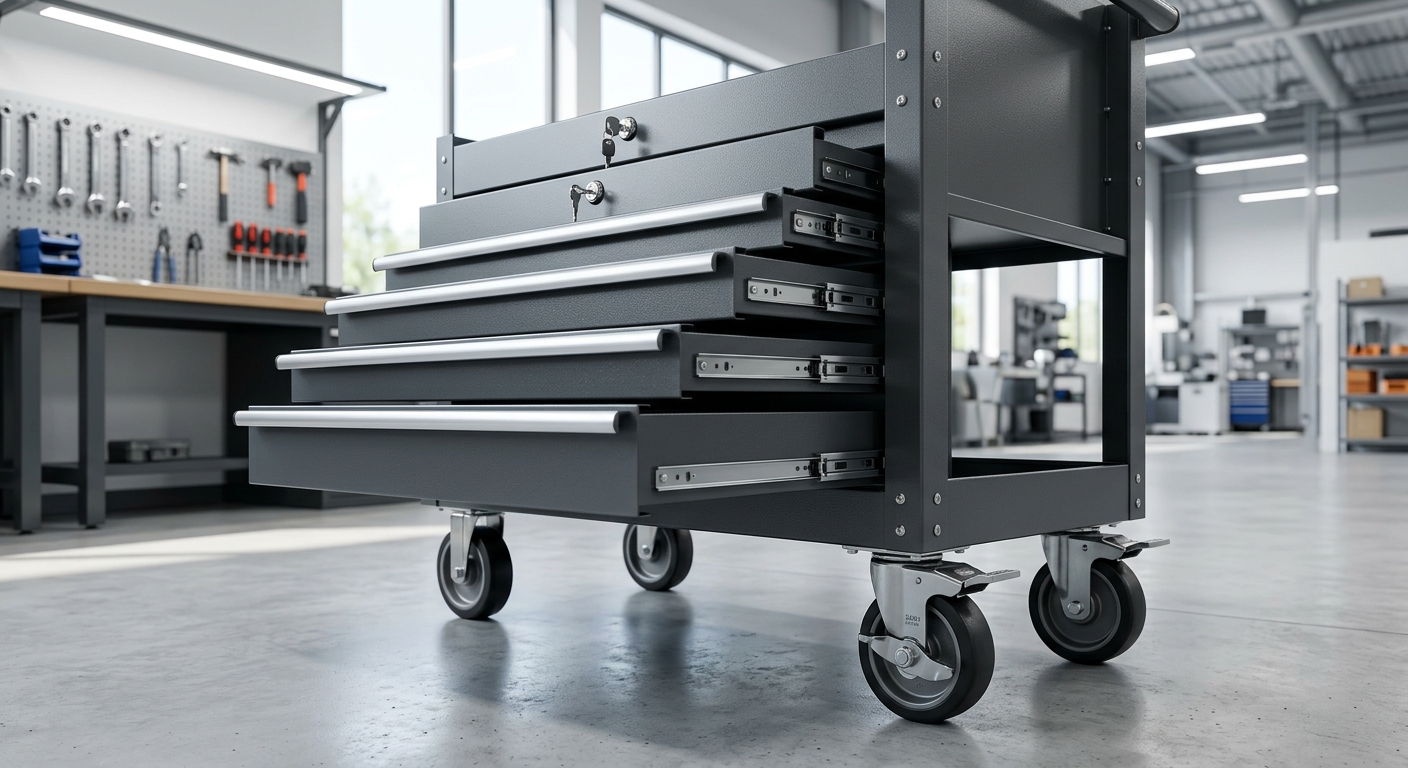
Before mass production begins, a pre-production sample (PPS) is mandatory. During this phase, the manufacturer will fabricate the initial unit to test structural rigidity and component fitment. This is the critical time to evaluate custom drawer slides for tool carts, ensuring they meet the specified load ratings (e.g., 100 lbs vs. 250 lbs per pair) and operate smoothly under maximum weight capacity.
Mass Production and Inline Inspection
Once the sample is approved, mass production commences. Adherence to strict tool cart quality control standards is vital during this 45- to 60-day phase. Manufacturers should implement inline inspections at key stages: laser cutting, CNC bending, robotic welding, and the powder coating line. Final assembly checks ensure that heavy-duty casters, locking mechanisms, and EVA drawer liners are installed correctly before moving to the packaging phase.
Supplier Audit Scorecard
Selecting the right custom tool cabinet manufacturer is the most critical step in your sourcing journey. Use this weighted scorecard to objectively evaluate potential suppliers based on their capabilities, quality management, and financial stability.
| Evaluation Criteria | Weight | Description | Minimum Acceptable Score (1-10) |
|---|---|---|---|
| Manufacturing Capability | 30% | In-house laser cutting, CNC bending, and automated robotic welding. | 8 |
| Quality Management | 25% | ISO 9001 certification, dedicated QC staff, and inline inspection protocols. | 8 |
| Customization Flexibility | 20% | Ability to modify dimensions, steel gauge, and integrate custom hardware. | 7 |
| Production Capacity | 15% | Monthly output volume and ability to scale during peak seasons. | 7 |
| Packaging & Logistics | 10% | Experience with ISTA drop-test standards and export-grade packaging. | 8 |
Procurement Checklist for Private Label Tool Storage Solutions
To ensure a smooth procurement cycle and minimize risks, follow this comprehensive checklist when engaging with a heavy duty tool cart supplier:
- RFQ Preparation: Provide detailed CAD drawings, a comprehensive BOM, and target pricing expectations upfront.
- Component Specs: Specify exact steel gauges, caster types (e.g., TPR, PU), and drawer slide load capacities.
- Sampling Protocol: Require a pre-production sample (PPS) for physical sign-off before authorizing mass production.
- Durability Testing: Conduct salt spray tests on the powder coating and cycle tests on the drawer slides to verify longevity.
- Inline QC: Implement inline inspections at the welding, painting, and final assembly stages.
- Final Inspection: Mandate AQL (Acceptable Quality Limit) standards, typically setting 1.5 for major defects and 4.0 for minor defects.
- Factory Compliance: Verify the factory's ISO 9001 certification for quality management systems.
- Material Compliance: Ensure REACH/RoHS compliance for any plastic components, rubber mats, or chemical coatings used.
- Lead Time Management: Confirm standard production lead times and build in a 15- to 30-day buffer for peak manufacturing seasons.
- Transit Protection: Require ISTA-certified drop testing for all tool cart packaging and shipping to mitigate transit damage.
- Warranty Terms: Clearly define the warranty period and the standard operating procedure for claiming defective units.
- Spare Parts: Negotiate terms for a percentage of replacement parts (e.g., spare casters, locks, or slides) to be included in the shipping container.
Navigating Tool Cart Packaging and Shipping
Industrial tool trolley customization often results in heavy, bulky products that are highly susceptible to damage during ocean freight and final-mile delivery. Proper packaging is non-negotiable. Packaging must utilize heavy-duty corrugated cartons (often double or triple wall) with reinforced corner protectors, honeycomb board inserts, and secure strapping.
Buyers should insist that the supplier's packaging design passes ISTA drop test standards. A failure in packaging not only results in unsellable inventory but also severely damages brand reputation when end-users receive dented or scratched cabinets.
Why SAFEWELL Is a Practical Fit
For brand owners looking to scale their private label offerings, SAFEWELL provides a reliable, high-capacity manufacturing foundation tailored to B2B procurement needs.
- OEM/ODM Core Advantage: We offer end-to-end customization from sheet metal fabrication to final assembly, ensuring your tool carts match your exact brand specifications.
- Advanced Manufacturing: Our facilities are equipped with automated laser cutting, CNC bending, and robotic welding for precise, repeatable production at scale.
- Robust Quality Control: We utilize in-house testing facilities to verify drawer load capacity, powder coat durability, and caster performance before shipment.
- Scalable Production: We offer flexible MOQs and high-capacity production lines designed to support both emerging private labels and established global brands.
- Export-Ready Packaging: Our proven packaging solutions are engineered to withstand international shipping stresses, drastically reducing transit damage rates.
FAQ: Sourcing OEM Tool Storage Equipment
How is the sampling and prototyping phase managed? The sampling phase typically takes 30 to 45 days. A custom tool cabinet manufacturer will translate your CAD drawings into a pre-production sample (PPS). This physical prototype is crucial for verifying structural integrity, steel gauge accuracy, and the performance of custom drawer slides for tool carts before mass production begins.
What are the standard inspection protocols before shipment? Pre-shipment inspections should follow strict tool cart quality control standards. Buyers typically mandate an AQL (Acceptable Quality Limit) inspection—often 1.5 for major defects and 4.0 for minor defects. Inspectors will check weld strength, powder coat adhesion (cross-hatch test), drawer alignment, and caster load capacity.
How should buyers handle production lead time fluctuations? Lead times can fluctuate due to raw material shortages or peak manufacturing seasons. To mitigate this when sourcing oem tool storage equipment, buyers should establish rolling forecasts with their supplier, secure raw materials (like SPCC steel) in advance, and build a 15- to 30-day buffer into their inventory planning.
What is the standard after-sales and claim process for defective units? A reliable heavy duty tool cart supplier will have a documented SOP for claims. Buyers must provide batch numbers, photos, and a defect description. The supplier typically issues a credit note or provides replacement units in the next container. Negotiating a 1-2% spare parts allowance (extra casters, slides, locks) upfront drastically reduces after-sales friction.
What is the typical OEM tool cart minimum order quantity? The standard oem tool cart minimum order quantity generally ranges from 50 to 100 units per SKU. However, highly customized private label mechanic tool carts requiring unique tooling or non-standard dimensions may require higher MOQs to offset initial setup costs.
Relevant Standards & References
- ISO 9001: Quality management systems requirements for manufacturing facilities. ISO 9001
- BIFMA: Often referenced for drawer slide cycle testing and load capacity standards. BIFMA
- ISTA: International Safe Transit Association standards for packaging drop tests and transit simulation. ISTA
- ASTM International: Standards for steel sheet specifications and powder coating adhesion testing. ASTM
Next Step: Start Your RFQ
Transitioning from concept to a market-ready product requires precise execution and a reliable manufacturing partner. Consolidate your CAD files, material specifications, and target volumes, and reach out to our engineering team to initiate your RFQ and begin the sampling process today.
FAQ
How is the sampling and prototyping phase managed?
The sampling phase typically takes 30 to 45 days. A custom tool cabinet manufacturer will translate your CAD drawings into a pre-production sample (PPS). This physical prototype is crucial for verifying structural integrity, steel gauge accuracy, and the performance of custom drawer slides for tool carts before mass production begins.
What are the standard inspection protocols before shipment?
Pre-shipment inspections should follow strict tool cart quality control standards. Buyers typically mandate an AQL (Acceptable Quality Limit) inspection—often 1.5 for major defects and 4.0 for minor defects. Inspectors will check weld strength, powder coat adhesion (cross-hatch test), drawer alignment, and caster load capacity.
How should buyers handle production lead time fluctuations?
Lead times can fluctuate due to raw material shortages or peak manufacturing seasons. To mitigate this when sourcing oem tool storage equipment, buyers should establish rolling forecasts with their supplier, secure raw materials (like SPCC steel) in advance, and build a 15- to 30-day buffer into their inventory planning.
What is the standard after-sales and claim process for defective units?
A reliable heavy duty tool cart supplier will have a documented SOP for claims. Buyers must provide batch numbers, photos, and a defect description. The supplier typically issues a credit note or provides replacement units in the next container. Negotiating a 1-2% spare parts allowance (extra casters, slides, locks) upfront drastically reduces after-sales friction.
What is the typical OEM tool cart minimum order quantity?
The standard oem tool cart minimum order quantity generally ranges from 50 to 100 units per SKU. However, highly customized private label mechanic tool carts requiring unique tooling or non-standard dimensions may require higher MOQs to offset initial setup costs.
Related Internal Resources
Use these pages to continue supplier qualification and project planning.
- Tool Cart Solutions - Review rolling cart options and capacity classes.
- Supplier Qualification Process - Understand factory qualification and program controls.
- Project Case Studies - See delivered projects and implementation details for global buyers.
- Request Factory Quote - Send your RFQ and receive a practical sourcing proposal.
- Vetting Tool Cart OEM Suppliers for Private Label Success - Read another related article from SAFEWELL News.
- Heavy Duty Tool Storage Systems: Industrial Buyers Guide - Read another related article from SAFEWELL News.
Need a Factory Plan?
Share your RFQ and we will provide a practical manufacturing proposal.
Contact SAFEWELL